
7 Mistakes You’re Making with Your Prop Firm Trading Strategy (and How CK Fixes Them)
Prop firm evaluations are a different sport than “normal” trading. In a funded trader program, you’re not just trying to be right: you’re trying to be consistent inside a rule-set (daily loss limits, trailing drawdown, position rules, news windows, etc.). That’s why smart futures traders still fail evaluations: they bring a strategy that works in theory, then break it in execution.
At CK TRADING INSTITUTE OF TECHNOLOGY LLC., our approach is simple: remove the noise, systematize the process, and train you to trade like a pro: low-risk, rules-first, and repeatable. Below are the 7 mistakes we see most often in futures trading for beginners chasing funded trader programs (Apex, TakeProfit, and similar): and exactly how instructor CK (George Ama) fixes them with a disciplined, AI-assisted framework.
Mistake #1: You’re Trading the Profit Target Instead of Trading the Setup
Problem:
Most evaluation failures aren’t because your strategy is “bad.” They happen because the profit target becomes a psychological trap. You start forcing trades to “make the numbers,” taking B- and C-setups, widening stops, and adding size too early. That’s how one messy day nukes a week of progress.
How CK fixes it:
CK trains a process-first scoring system:
- Trade only pre-defined A+ criteria (structure + confirmation + risk window).
- One job: execute the plan; let the math do the rest.
- Treat the profit target like a byproduct, not a mission.
We use an AI-powered, rules-based workflow to reduce decision fatigue: identify high-probability zones, wait for confirmation, then execute with a fixed risk unit. No improvising. No “maybe this time.” Just clean reps.
Action:
Write down your exact entry trigger, your invalidation level (stop), and your profit-taking logic before the session. If you can’t define it, you can’t repeat it.

Mistake #2: You’re Oversizing (Even If You Don’t Think You Are)
Problem:
In futures, sizing mistakes happen fast. A couple of contracts too many, a slightly wider stop, and suddenly you’ve risked enough to violate a daily loss limit on one trade. Many funded trader programs are designed to reward consistency: not aggression.
Common sizing leaks:
- “I’ll just size up a bit to recover.”
- “This setup is so clean, I can push it.”
- “I’m behind schedule, let me accelerate.”
How CK fixes it:
CK’s risk model is built around evaluation survival:
- Fixed risk per trade (not fixed contracts).
- A daily “max pain” line that prevents spirals.
- A rule: if you’re emotionally activated, you reduce size: period.
We teach you to think in risk units instead of “contracts.” That’s how you protect drawdown while still letting your edge play out.
Action:
Decide your max loss per trade and per day in dollars, then reverse-engineer contract size from the stop distance. No exceptions.
Mistake #3: You Don’t Fully Understand the Rules (So You Break Them Accidentally)
Problem:
This one is brutal because it’s avoidable. Many traders fail funded trader programs due to rule violations, not trading performance:
- Trailing drawdown vs. static drawdown confusion
- Equity-based limits (floating PnL counts!)
- News-event restrictions
- Inconsistent trading days / minimum days (varies by firm)
You can be profitable and still fail because you didn’t respect the rule-set.
How CK fixes it:
CK makes rules mastery non-negotiable. We simplify your evaluation into a checklist you can follow under pressure:
- Drawdown type (trailing or end-of-day)
- Daily loss limit triggers (realized vs floating)
- Allowed instruments and times
- News windows and volatility filters
This is where our “no-nonsense” style matters: we remove clutter and focus on the rules that actually fail traders.
Action:
Before you place trade #1, build a one-page “evaluation operating manual.” Keep it visible while you trade.
Mistake #4: You’re Overtrading (Because You’re Bored, Anxious, or Chasing)
Problem:
Overtrading is the silent killer in futures trading for beginners. You take too many trades, pay more commissions/slippage, and dilute your edge. Worse: overtrading increases emotional load, which leads to the next mistake: revenge trading.
Signs you’re overtrading:
- Trading mid-range chop with no structure
- Taking “almost” setups
- Clicking because you haven’t traded in 20 minutes
How CK fixes it:
CK enforces trade frequency discipline:
- A+ setups only
- Structured sessions (specific windows, not all-day screen time)
- “If-then” rules for when to stop trading (time-based and loss-based)
We also teach you how to use AI-assisted structure recognition to stay patient: so you’re waiting for your market, not forcing trades in any market.
Action:
Set a max trades-per-session cap. When you hit it, you stop. The goal is mastery, not activity.
Mistake #5: You Don’t Have a Real Trading Plan (You Have Opinions)
Problem:
A plan isn’t “I buy support and sell resistance.” A plan is a complete operating system:
- What market conditions you trade (trend, range, volatile open, etc.)
- What setup you trade (specific triggers)
- Where you place the stop (invalidation, not comfort)
- How you take profit (scaling, targets, runner logic)
- When you stop trading (daily limits, time stops)
Without a plan, you’re improvising: and improvisation gets expensive in funded trader programs.
How CK fixes it:
CK’s framework turns your strategy into a repeatable blueprint:
- A defined setup library (few setups, mastered deeply)
- Standardized execution rules
- Review and journaling structure (so you can actually improve)
We focus on consistency under evaluation pressure, because that’s the skill that unlocks real funding: and long-term financial sovereignty.
Action:
Write your plan in bullets. If it can’t fit on one page, it’s probably clutter.
Mistake #6: You Trade High-Impact News Like It’s a Normal Candle
Problem:
High-impact news can move futures like a lightning strike. Your stop can get skipped, spreads can widen, and the market can reverse faster than your brain can process. Even if you “guess right,” it’s often not repeatable: and some evaluations restrict news trading anyway.
How CK fixes it:
CK teaches you to treat news like a separate market regime:
- Avoid restricted windows (firm-specific)
- Use volatility filters
- If trading post-news, wait for structure to rebuild (don’t jump into the first spike)
This is where low-risk trading becomes a competitive advantage. You don’t need the wild move. You need the clean move.
Action:
Check the economic calendar before your session. If a major event is on deck, plan your “no-trade window” and honor it.
Mistake #7: You Ignore Stop Discipline (or You “Mentally Stop”)
Problem:
No stop (or a mental stop) is how accounts blow up. In prop evaluations, it’s also how you break drawdown rules instantly: especially with trailing drawdown. One oversized loss can end your evaluation on the spot.
How CK fixes it:
CK is strict here: hard stops, always. Then we layer on structure:
- Stop goes at invalidation (where your idea is wrong)
- Position size adapts to the stop distance
- If the stop required is “too big,” you pass on the trade
That’s how you stay alive long enough for your edge to pay you. This is trading like a professional, not gambling like a tourist.
Action:
Commit to “stop = invalidation.” If you keep moving stops, your strategy is not the issue: your discipline is.
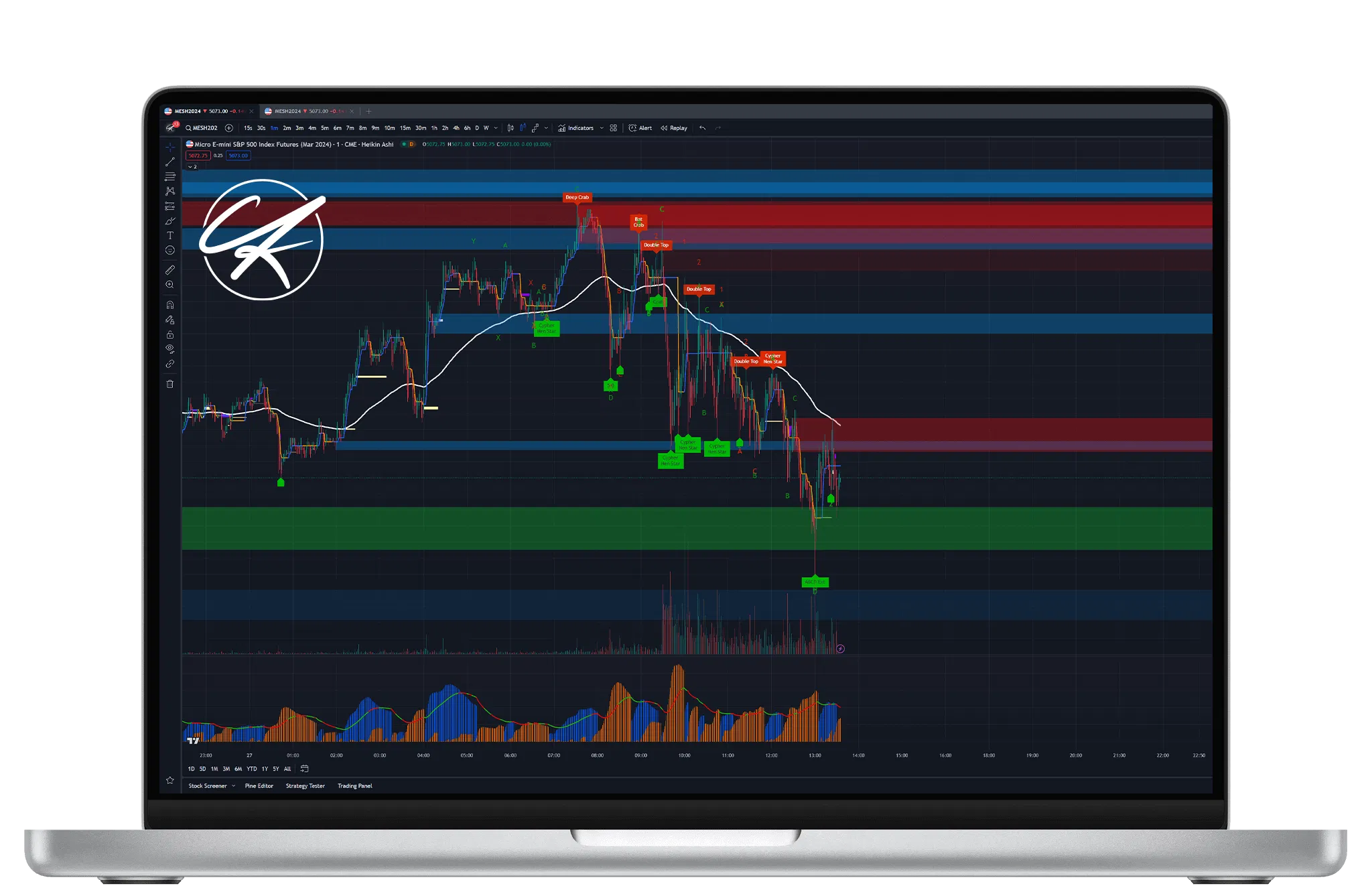
The CK Method in One Line: Low-Risk, Rules-First, Repeatable
Prop firms reward traders who:
- manage risk like a machine,
- follow rules like a pilot,
- and execute a simple edge with patience.
That’s what we build at CK TRADING INSTITUTE OF TECHNOLOGY LLC.: a community standard of mastery over emotion, and a practical path from beginner to funded.
If you’re ready to stop guessing and start executing, take the next step.
🔥 Get Started with Apex Trader Funding (Up to 90% OFF) : Coupon Code: KZRKEGJN
Problem: You want a real shot at a funded trader program, but you need the right structure and a clean evaluation path.
Solution: Start your evaluation with a top prop firm and trade your plan with discipline.
Action: Use our link + coupon for the deepest discount available.
✅ Click here to start with Apex Trader Funding (Affiliate Link)
https://apextraderfunding.com/member/aff/go/forexwranglerga3
Use coupon code: KZRKEGJN (up to 90% OFF!)
Raw, unpolished community proof (real talk):
- “I stopped overtrading the same week I put a trade cap in place… my PnL got boring: in a good way.”
- “Once I treated drawdown like the #1 rule, everything changed. I wasn’t ‘trying to win’ anymore, I was executing.”
- “CK’s risk unit idea finally made sizing make sense. I was randomly picking contracts before.”
Quick Links (If You Want the Straight Path)
- Main site: https://www.cktraderpro.com
- Pricing & plans: https://www.cktraderpro.com/pricing-plans
- Start here: https://www.cktraderpro.com/get-started
- About us: https://www.cktraderpro.com/about-us
- Contact: https://www.cktraderpro.com/contact-us