How to Manage Trading Emotions Under Pressure

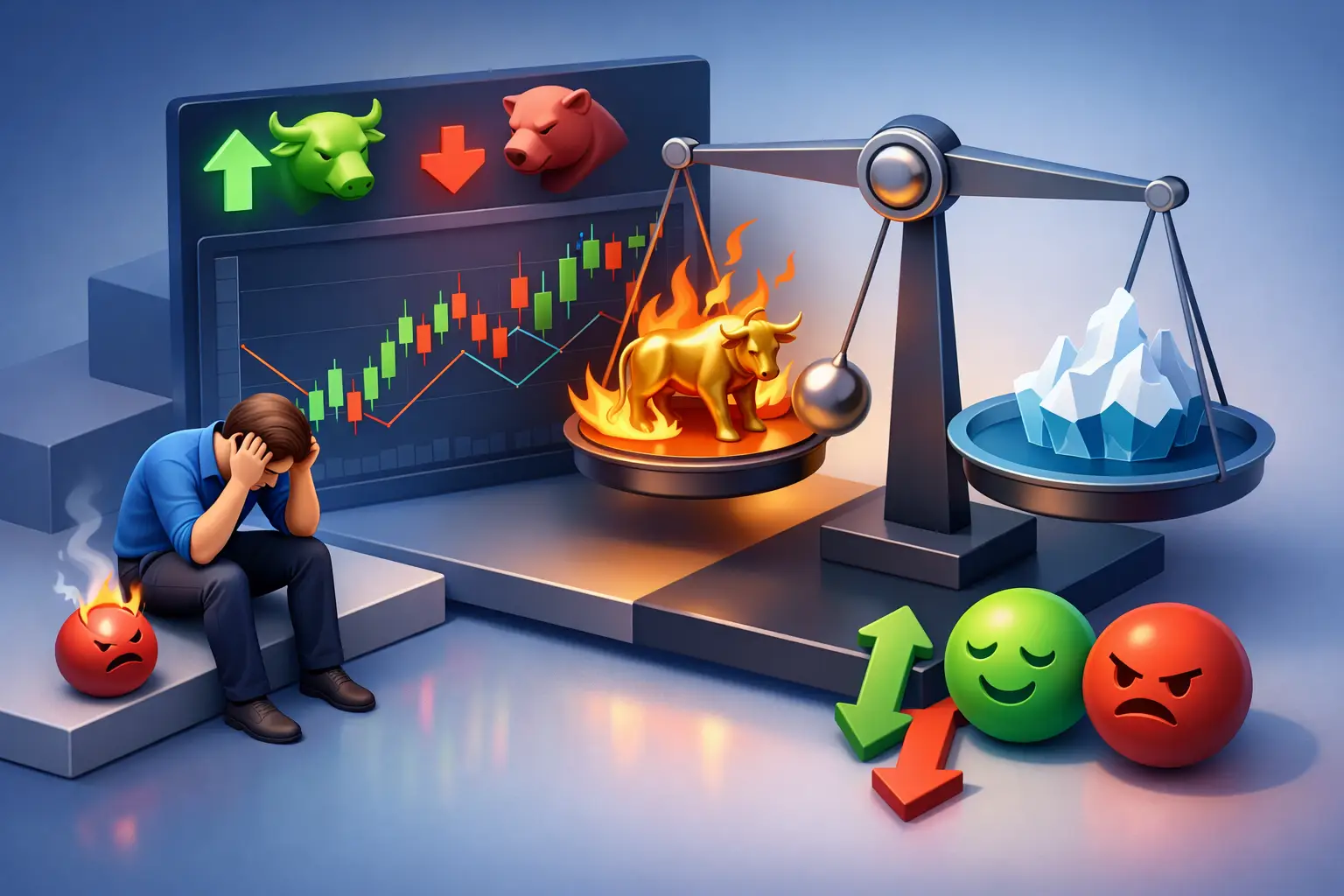
A trade moves against you by a few points, and suddenly the setup you planned no longer matters. You move your stop, add a contract, or take the next entry before it is actually there. That is how a controlled trading day can turn into a blown evaluation. Learning how to manage trading emotions is not about becoming numb or never feeling pressure. It is about building rules that keep your next decision from being controlled by the last candle.

For futures traders working toward prop firm funding, emotional discipline is not a soft skill. It is account protection. Drawdown limits are real, and one revenge-trading session can erase a week of patient progress. The good news is that emotional control can be trained the same way you train chart reading, entries, and risk management: with a repeatable process.

Why emotions hit prop traders harder

Trading naturally creates emotional triggers because every decision has an immediate score attached to it. A green trade can make you feel unstoppable. A red trade can make you feel behind, wrong, or desperate to recover. Add an evaluation profit target and a trailing drawdown rule, and that pressure can get louder fast.

The problem is rarely that a trader does not know what a good setup looks like. Many traders can identify trend, support and resistance, or a clean confirmation when the market is closed. The struggle starts when real-time price action creates fear of missing out, fear of losing, or the urge to force a win.

That is why more information alone does not fix emotional trading. A new indicator will not save a trader who ignores their stop. A larger account will not help someone who treats every losing trade as a personal challenge. You need a structure that makes discipline easier than improvisation.

Start with risk small enough to think clearly

Position size is one of the biggest emotional levers in trading. If one trade can put a major dent in your daily loss limit, you will watch every tick like it decides your future. That is not a state where most people execute well.

Use a contract size and stop amount that lets you follow your plan without panic. For many traders in an evaluation, that means beginning with micros or using fewer contracts than they believe they “should” use. Smaller size may feel slow, especially when you are focused on reaching a profit target. But controlled progress keeps you in the game. Oversizing creates the exact pressure that leads to impulsive decisions.

Set three numbers before the session starts: your maximum risk per trade, your maximum loss for the day, and your maximum number of attempts. Those numbers should fit the rules of your specific prop firm account, including its drawdown requirements. Once you hit the daily loss limit, you are done. Do not negotiate with yourself after the damage is already done.

A stopped-out trade is a business expense. Breaking your risk rule is a preventable mistake. Learn to see the difference.

Build a pre-market routine that removes guesswork

Emotion takes over in the gaps where your plan is unclear. Before the market opens, define what you are waiting for and what you will ignore. You do not need to predict every move. You need to know the conditions that earn your participation.

Mark the levels that matter to your strategy, identify the broader market direction, and decide which sessions or time windows you trade best. If you use TradingView tools or algorithms, let them support a clear system rather than turn into permission to take every signal. A signal at a key level in the direction of your plan is different from a random alert in choppy price action.

Your pre-market plan can be short, but it should answer a few practical questions in writing: What is the market structure? Where is my best long or short idea? What confirmation do I need? Where is my stop? Where will I take profit? What would tell me to stay out?

Writing this down matters because your pre-session self is usually calmer than your in-trade self. When volatility picks up, you are not inventing a strategy candle by candle. You are executing a decision you made while clear-headed.

Use a hard reset after every trade

The most dangerous trade of the day is often not the first loss. It is the trade you take immediately after it.

After a loss, step away from the order entry for a few minutes. Stand up, take a breath, look away from the chart, and then review the trade with one question: Did I follow my rules? If the answer is yes, the loss does not need to be fixed. Your job was to take a valid setup with defined risk. Losses are part of a strategy with any realistic win rate.

If the answer is no, do not rush to make it back. Identify the rule break and reduce size or end the session. Trying to repair a discipline problem with another trade usually creates a larger discipline problem.

The same reset applies after a big winner. Winning can create just as much emotional risk as losing. A strong early trade may tempt you to double size, trade lower-quality setups, or give profits back because you feel like you are reading the market perfectly. Lock in the professional mindset: a good trade does not mean you are guaranteed another one.

How to manage trading emotions when you feel FOMO

Fear of missing out is especially common when futures are moving fast and social feeds, chat rooms, or headlines make it look like everyone else caught the move. But chasing is not a strategy. By the time an entry feels obvious because price is running, the risk-to-reward may already be gone.

Create a rule for missed entries. For example, if price leaves your planned area without confirmation, you do nothing until a fresh setup forms. You are allowed to miss a move. You are not allowed to take a bad trade just because the market was exciting.

This is where running your own race matters. Another trader may have entered earlier, use a different system, or be trading a different account size. Their result has no impact on your drawdown limit. Focus on the setup in front of you, not the screenshot someone posts after the fact.

Separate your identity from your P&L

A losing day does not mean you are a losing trader. A payout does not mean you no longer need rules. Traders get emotionally reactive when they make a single trade mean too much about their skill, intelligence, or future.

Replace emotional statements with measurable ones. Instead of saying, “I always mess this up,” say, “I took two entries outside my plan after 10:30 a.m.” Instead of saying, “The market hates me,” say, “I traded against the trend at a major level.” Specific language creates a specific correction.

Keep a journal that records more than profit and loss. Track your setup, time of day, risk amount, whether you followed your plan, and your emotional state before and after the trade. Over several weeks, patterns become visible. You may find that your worst trades happen after one early loss, during lunch-hour chop, or when you increase size after a win. That data gives you something real to improve.

Know when to stop trading

There is strength in ending a session early. If you hit your daily goal with clean execution, it can make sense to protect the win rather than keep searching for action. If you hit your loss limit, stopping prevents a manageable red day from becoming an account-threatening one.

You should also stop when your mental state changes. Anger, urgency, exhaustion, and the need to prove something are all warning signs. The market will be open again. Your capital access matters more than forcing one more trade today.

This does not mean you need to trade scared or quit after every small setback. It means you set objective guardrails before emotion has a vote. Some days a valid second or third setup will be there. Other days, the best trade is no trade.

Train discipline outside market hours

Emotional control improves fastest when you review your behavior after the market closes. Replay trades, study whether your entry matched your rules, and make one adjustment at a time. Do not rebuild your entire strategy after a single losing session.

A supportive trading community can help here because accountability exposes the habits you may rationalize alone. At CK Trader Pro, the focus is on building repeatable execution around risk, structure, and prop firm rules – not chasing one lucky day. The goal is to become the trader who can pass an evaluation and manage funded capital with the same discipline.

Your edge is not just the setup on the chart. It is your ability to take that setup without fear, skip the trades that do not qualify, and protect the account when the day is not going your way. Build that habit one session at a time, and your confidence will come from evidence rather than emotion.

Funded Account Guide for Futures Traders

A funded futures account can give you access to larger buying power without putting thousands of dollars of your own savings on the line. But getting funded is not about finding one big trade. This funded account guide is about building the habits that help you pass an evaluation, protect the account after you pass, and trade with a real plan when payouts become the goal.

The traders who keep blowing evaluations usually do not need more indicators. They need a process. They need to know their daily risk before the market opens, understand exactly where the drawdown sits, and stop treating a funded account like a lottery ticket.

What a Funded Futures Account Actually Is

A proprietary trading firm lets traders complete an evaluation under specific rules. If you meet the profit target while respecting the firm’s loss limits, position rules, and time requirements, you may qualify for a funded or performance account. The firm provides the capital structure, while you provide the execution.

For many retail traders, this creates a lower-cost path to trading larger contract sizes than they could responsibly use in a personal brokerage account. You pay for an evaluation and prove you can follow rules. You are not depositing a large account balance and hoping market exposure works out.

That does not make funded trading risk-free. Evaluation fees, reset fees, subscriptions, data costs, and rule violations can add up quickly. More importantly, funded-account rules can be unforgiving. A good trade idea does not matter if it breaks the trailing drawdown or exceeds your daily loss limit.

Start With the Rules, Not the Profit Target

The biggest mistake beginners make is staring at the target. They see a $3,000 target, imagine the finish line, then force trades until the account is gone. The target matters, but the rules determine whether you get to keep trading tomorrow.

Before placing a trade, write down the account’s maximum drawdown, daily loss limit if applicable, minimum trading-day requirement, allowed contract size, news or overnight restrictions, and payout conditions. Firms update rules, and account types can differ, so verify the current terms directly before every evaluation and funded phase.

Understand Trailing Drawdown

Trailing drawdown is where many solid traders get caught. Depending on the firm and account type, the drawdown may move up as your account reaches new highs. That means profits can raise the line you are not allowed to cross.

Here is the practical lesson: a fast $1,000 day is not always helpful if you give most of it back the next morning. A slower, controlled climb can leave more room to operate. Your job is not to post the biggest screenshot in the community. Your job is to preserve the account long enough to build consistent results.

Know Your Real Risk Per Trade

Pick a fixed dollar risk that makes sense for the account and stay with it. If one full stop is large enough to ruin your day, your size is too big. Smaller size may feel boring, especially when the market is moving, but boring is often what gets traders funded.

A simple framework works well: set a maximum number of losing trades, a daily loss limit below the firm’s hard limit, and a daily profit cap that tells you when to stop pressing. Your personal guardrails should protect you before the firm has to.

Choose an Evaluation That Fits Your Trading Style

Do not select an account just because it has the largest advertised balance. Compare the rules with the way you actually trade. A trader who prefers one or two precise setups may value a reasonable drawdown and flexible time window. A trader who scalps may need to pay closer attention to permitted size, platform costs, and the speed at which a trailing threshold moves.

For US futures traders, low-cost evaluations can be an accessible training ground, particularly when paired with a clear system. Apex Trader Funding is one option many traders consider, but the right choice depends on current rules, budget, platform preferences, and your ability to manage risk. Never buy multiple accounts because you are frustrated with one. Prove the process on one account first.

The account size should also match your experience. Bigger buying power can create a false sense of safety. If you cannot manage one micro contract with discipline, more contracts will magnify the same problem.

Build a Passing Plan Before You Buy

The evaluation should begin with a written plan, not a rush of adrenaline after checkout. Define the market you will focus on, your trading window, the setups you are allowed to take, your entry confirmation, stop placement, target approach, and maximum loss for the day.

For example, a trader might focus only on the first two hours of the New York session, trade one to three high-quality setups, and stop after two losses. Another may wait for a trend, a key level, and confirmation from price action before entering. The exact setup can vary. The consistency of execution cannot.

Use One Repeatable Setup

The market offers endless reasons to enter. That is exactly why newer traders get scattered. One trade is based on a breakout, the next on a reversal, then a social media post creates a third idea. By the end of the day, there is no way to tell what is working.

Choose a setup you can explain in plain English. What market condition are you looking for? Where is the invalidation point? What has to happen before you enter? Where do you take partial profits or exit? Charting tools and TradingView-based algorithms can help organize the picture, but no tool replaces a defined risk point.

Track at least 20 to 30 examples before deciding a strategy is broken. One red trade is not proof that the setup failed. It may simply be the normal cost of doing business.

Trade Micros Until Your Execution Is Stable

Micro contracts are one of the best ways to reduce damage while you learn. They let you practice entries, stops, and trade management with less exposure than standard contracts. That breathing room is valuable when you are working around a drawdown rule.

Passing slowly is still passing. A trader who makes controlled progress over several days often has a better chance of keeping the account than someone who swings for the target in one session. There are times to increase size, but that comes after your process has earned it.

The Daily Routine That Protects Evaluations

Your trading day should have a beginning and an end. Before the open, check scheduled economic releases, mark major highs and lows, identify the market’s current trend or range, and review your account limits. Decide what would make today a no-trade day, too.

During the session, focus on execution rather than P&L. Watching every dollar tick can push you into early exits, revenge trades, or oversized attempts to recover a loss. Keep your attention on whether the trade met your rules.

After the session, journal the result. Save a chart image, record the setup, note the risk used, and write one honest sentence about your execution. This is where accountability becomes an edge. A community and live coaching can help you see recurring mistakes, but you still have to own the click of the button.

Passing Is Only the First Test

Many traders pass an evaluation, then lose the funded account because they immediately trade larger. Treat the funded phase like a fresh account with a different mission: protect capital, meet any required trading days, and build toward payout eligibility without violating terms.

Read the payout rules as carefully as you read the evaluation rules. Some firms have consistency expectations, minimum balance buffers, timing requirements, or limits that affect when and how you can request a payout. Plan around those conditions instead of being surprised by them.

This is also where emotional discipline matters most. A payout is exciting, but it should not turn into pressure to force a green day. Your edge is the same one that got you through the evaluation: small, repeatable decisions made without panic.

Common Reasons Traders Blow Funded Accounts

Most failures are predictable. Traders oversize after a win, move stops because they do not want to be wrong, take trades outside their time window, or keep trading after reaching a daily goal. They confuse activity with progress.

The fix is not glamorous. Set hard limits, use smaller size, wait for your setup, and walk away when the plan says you are done. If you have failed several evaluations, pause before buying another one. Review the data. Was the issue strategy quality, risk size, lack of patience, or ignoring rules? Solve that one problem first.

CK Trader Pro teaches traders to pair market education, TradingView tools, and live accountability with prop-firm-specific risk management because execution needs structure. The goal is not to depend on someone else’s callout. The goal is to become the trader who can read the chart, manage the risk, and make disciplined decisions on your own.

Your next evaluation does not need a heroic trade. It needs a calm plan, a protected drawdown, and the patience to let consistent execution do its job.

Trailing Vs. End-of-Day Drawdown: Which Is Better For Your Funded Account?

You’ve spent weeks studying the charts. You’ve refined your entry. You’ve finally pulled the trigger on a prop firm evaluation, and suddenly: pop. Your account is blown. But wait, your balance is still above the starting line. What happened?

Welcome to the world of "Drawdown." It’s the silent killer of most aspiring traders.

If you’re diving into futures trading for beginners, understanding the math behind how prop firms track your risk is more important than knowing where the market is going. At CK TRADING INSTITUTE OF TECHNOLOGY LLC, we focus on stripping away the noise. I’ve spent 28 years as a floor trader, and if there’s one thing I’ve learned, it’s that the rules of the game matter more than the game itself.

Today, we’re breaking down the two biggest types of risk tracking: Trailing Drawdown and End-of-Day (EOD) Drawdown. One is a relentless shadow; the other is a much-needed breathing room.

THE RELENTLESS SHADOW: TRAILING DRAWDOWN

trailingDrawdownDiagram

Trailing drawdown is the standard for many funded trader programs, most notably Apex Trader Funding. Here’s how it works: the "maximum loss" level follows your account's peak value in real-time.

Imagine you have a $50,000 account with a $2,500 trailing drawdown. Your "failure point" starts at $47,500.

  1. You take a trade. You’re up $1,000. Your account hits $51,000.
  2. Because it’s a trailing drawdown, your failure point just moved up to $48,500.
  3. The market moves against you. You’re now only up $200. Your account is at $50,200.
  4. But your failure point stayed at $48,500.

The danger here is "unrealized profit." If you are up $2,000 in a trade but don't close it, and the market pulls back, that $2,000 peak already pulled your drawdown line up. You are effectively "trapped" by your own success. This is why many find it difficult to learn how to pass prop firm evaluation rules when volatility is high.

THE BREATHING ROOM: END-OF-DAY (EOD) DRAWDOWN

ATAChart

This is where the game changes for day trading for beginners. Firms like Lucid Trading use End-of-Day drawdown.

With EOD, your maximum loss level only updates at the end of the trading day based on your closed balance. If you are up $2,000 intraday and the market pulls back before you close, it doesn't matter. Your drawdown line stays put until the market close.

WHY EOD IS THE GOLD STANDARD FOR BEGINNERS:

  • Less Stress: You don’t have to worry about every tick pulling your "failure line" higher.
  • Hold Your Winners: You can give your trades room to breathe without the fear of an intraday spike blowing your account.
  • Focus on Strategy: It allows you to focus on the chart, not the math of your drawdown.

For those looking for a prop firm trading strategy that actually works, EOD is almost always the better choice for longevity.

THE LUCID ADVANTAGE

LucidTradingSetup

At CK Trading, we’ve vetted the players. While Apex is a giant in the industry, Lucid Trading is currently leading the pack for traders who want a fair shake.

Lucid offers a 1-day evaluation. You read that right. If you have the skill and the right tools (like our ATA algorithm), you can be funded in 24 hours. Their reputation for payouts and their trader-friendly EOD drawdown make them our top recommendation for anyone starting their journey to financial sovereignty.

PRO TIP: Use code CKGA3 at Lucid Trading for the best available entry rate. Join Lucid Trading Here.

LEVERAGING AI: THE AUTOMATED TRADE ASSISTANT (ATA)

TradingViewChart

Whether you choose Trailing or EOD drawdown, you need precision. My 28 years on the floor taught me that human emotion is the biggest risk factor. That’s why we developed the Automated Trade Assistant (ATA).

The ATA is an AI-powered algorithm coded for TradingView that removes the guesswork. It identifies macro and micro trends, highlights supply and demand zones, and gives you clean, no-noise signals.

  • Precision Entries: Stops you from "chasing" and dragging your trailing drawdown up unnecessarily.
  • Risk Management: Built-in logic to help you stay within prop firm parameters.
  • Simplicity: Designed so beginners can see the market the same way a 28-year floor veteran does.

You don't need to risk thousands of your own money. With our education and the right prop firm, you can start with as little as $20 and gain access to $50k, $100k, or even $150k in trading capital.

APEX VS. LUCID: A QUICK BREAKDOWN

Feature Lucid Trading (Recommended) Apex Trader Funding
Drawdown Type End-of-Day (EOD) Intraday Trailing
Evaluation Time As fast as 1 Day Minimum 7 Days
Code CKGA3 KZRKEGJN
Best For Consistency & Lower Stress High Volume / Multiple Accounts

START YOUR JOURNEY TO FINANCIAL FREEDOM

SuccessTrading

Stop blowing accounts because you didn't understand the fine print. Trading is about risk management first and profit second. By choosing an EOD drawdown firm like Lucid and using AI-powered tools like the ATA, you are significantly increasing your odds of success.

We’re not just teaching you how to trade; we’re teaching you how to master the business of trading. Access professional-level capital, minimize your personal risk, and join a community that actually wants to see you get paid.

YOUR ACTION PLAN:

  1. Join the Community: Head over to www.cktraderpro.com to get the ATA and start your training.
  2. Get Funded: Sign up for an evaluation.

🚀 READY TO GET FUNDED?

Lucid Trading is our #1 choice for a stress-free, 1-day evaluation with End-of-Day drawdown.
👉 Click Here to Get Started with Lucid Trading
Use Code: CKGA3

Apex Trader Funding
If you prefer the larger buffer of Apex, use our affiliate link and code for up to 90% OFF.
👉 Click Here to Get Started with Apex
Use Code: KZRKEGJN

How to Build Trading Discipline That Protects Accounts

A prop-firm evaluation rarely gets blown because a trader cannot find a good entry. It gets blown when one normal red trade turns into revenge trading, oversized contracts, and a decision to ignore the plan. The trader may have read the market correctly all week, then gives back the progress in one emotional hour. Learning how to build trading discipline changes that pattern.

Discipline is not about being fearless or forcing yourself to trade less. It is the ability to follow a proven process when the market is moving fast, your last trade lost, or a payout goal feels close enough to touch. For futures traders working toward a funded account, that process protects more than a daily P&L. It protects your drawdown, your evaluation, and your opportunity to trade larger capital without putting a large amount of personal savings on the line.

Discipline Is a Risk-Control System

Most traders treat discipline like a personality trait. They say they need to be more patient, more confident, or less emotional. Those things help, but they are not a system. A disciplined trader has already decided what happens before the opening bell, before the setup appears, and before a loss tests their resolve.

This matters even more in prop trading. Evaluation rules create hard boundaries: daily loss limits, trailing drawdowns, contract limits, consistency expectations, and profit targets. A trader who takes random risk can be profitable on paper and still fail the account. The goal is not to hit a home-run trade. The goal is to keep showing up with the account intact long enough for your edge to do its job.

That means your rules must be specific. “I will manage risk better” is not a rule. “I will stop for the day after two losing trades or a $250 loss” is a rule. You can measure it, follow it, and review it.

How to Build Trading Discipline Before the Market Opens

Trading discipline starts before your first order, not after a trade goes wrong. Your pre-market routine should be short enough to repeat every day and clear enough to keep you from chasing the first big candle you see.

Start by checking the day’s scheduled economic events and marking the major levels on your chart. Identify the prior day’s high and low, overnight range, key support and resistance zones, and the market trend you are trading. Then decide what type of day you are likely dealing with. Is price trending cleanly? Is it trapped in a range? Is major news likely to create fast, unpredictable movement?

You do not need to predict the exact direction of the market. You need to know what conditions would make your setup valid and what conditions would make you stand aside. That distinction saves accounts.

Trade One or Two Defined Setups

A trader with five different entry ideas usually has no entry plan at all. When you are building consistency, choose one or two setups that you understand well. For example, you may trade a pullback in the direction of the higher-time-frame trend or a breakout and retest at a clearly marked level.

Write down the conditions for each setup: market context, entry trigger, stop location, target, and reason to avoid it. If your TradingView charting tools or algorithms are part of your process, use them as confirmation within a plan, not as a reason to click buy or sell without context.

The trade does not need to happen every session. Some days do not offer your setup. Sitting out is not missing money. It is following the plan, and that is a win when you are protecting an evaluation account.

Set Your Risk Before You See a Trade

Your contract size and maximum loss should be decided before the market opens. Do not increase size because you had a winning morning. Do not double size because you want to recover a loss. Those decisions feel logical in the moment, but they are usually driven by emotion rather than probability.

A simple framework works well: define a maximum loss per trade, a maximum loss per day, and a maximum number of attempts. Your exact numbers depend on the prop-firm account size, its drawdown rules, and your setup’s normal stop size. The smaller your margin for error, the more conservative your risk should be.

For many developing traders, one to three high-quality attempts is enough. If you have reached your daily stop, your job is over. Closing the platform is not weakness. It is professional risk management.

Remove the Decisions That Cause Revenge Trading

Revenge trading is rarely about anger alone. It is usually caused by a trader leaving too many decisions open. If you can decide at any time to add contracts, move a stop, take another entry, or keep trading after your limit, then a losing trade becomes a negotiation with yourself.

Remove the negotiation. Put your stop and target in when you enter. Use bracket orders if your platform supports them. Create a hard daily loss level and treat it as final. If you tend to trade after your cutoff, step away from the desk, switch off the charts, or use platform controls that limit your ability to place more orders.

There is a trade-off here. Tight rules can occasionally make you stop on a day when a later setup would have worked. That is acceptable. You are not trying to capture every move. You are building a process that survives the days when your decision-making is not at its best.

Keep a Journal That Exposes Behavior, Not Just Profit

A trading journal should tell you whether you followed your rules, not simply whether the trade made money. A green trade taken outside your plan is still a mistake because it rewards behavior you cannot repeat reliably. A red trade taken exactly as planned may be a good trade.

After each session, record the setup, entry, stop, target, result, and a screenshot of the chart. Then answer three questions: Did I wait for my setup? Did I follow my risk rules? What was my mental state when I entered and exited?

At the end of the week, look for patterns. Maybe your first trade is consistently solid but your third trade is impulsive. Maybe you trade well on trend days but force trades during midday chop. Maybe losses grow only when you move your stop. Your journal turns vague frustration into a specific problem you can fix.

Use Accountability When Willpower Is Not Enough

Trading alone makes it easy to rewrite the story. After a bad session, a trader may call an impulsive entry “aggressive” or blame the market for a rule violation. Accountability brings the truth back into focus.

Share your daily plan or end-of-day review with a trading community, coach, or serious trading partner. You do not need someone to approve every trade. You need someone who will ask whether you followed the rules you said you would follow. CK Trader Pro is built around this kind of hands-on guidance: traders learning the same prop-firm rules, reviewing execution, and staying focused on steady progress rather than one lucky day.

The right community also helps you run your own race. Someone else passing an evaluation in three days does not mean you need to rush your process. Fast gains are exciting, but durable traders are built through controlled repetition.

Practice the Reset After a Loss

Losses are part of a working trading system. The damage starts when a loss becomes evidence that you need to change everything immediately. Build a reset routine for that moment.

After a losing trade, step back for a few minutes. Check whether the setup met your rules and whether you executed it correctly. If it did, accept the outcome and wait for the next valid opportunity. If it did not, identify the violation and decide whether you are still clear enough to trade. Sometimes the disciplined choice is to stop early, even if your formal daily loss limit has not been reached.

A reset is especially valuable after a big winner, too. Profit can create the same overconfidence that a loss creates frustration. If you hit your daily goal, consider ending the session or reducing size. The market will be there tomorrow. A funded account is more valuable than proving you can trade all day.

Measure Discipline in Small Wins

Do not wait for a payout or a passed evaluation to decide whether you are improving. Track smaller wins: five sessions without breaking your daily stop, a full week of taking only planned setups, or a month without increasing size after a loss. Those are the habits that eventually produce better performance.

Your process will evolve as you gain experience. You may refine entries, adjust targets, or learn that a certain market window fits you better. But your core standard should remain steady: protect the account first, take only qualified risk, and review every decision honestly.

The next time you feel the urge to force a trade, remember what you are really building. It is not just a green day. It is the ability to trust yourself with larger capital, one disciplined decision at a time.

Prop Evaluation Versus Brokerage Account

Most traders do not fail because they cannot find a trade. They fail because one oversized position, one emotional recovery attempt, or one unplanned news trade does too much damage. The choice between a prop evaluation versus brokerage account matters because it determines where that damage lands: inside a rules-based evaluation or directly in your personal account.

For a retail futures trader, this is not just a platform decision. It is a decision about capital, accountability, pressure, and the type of trading habits you need to build. A prop evaluation can give a disciplined trader a lower-cost route toward accessing larger buying power. A brokerage account gives you more control, but it also means your own money absorbs every loss.

Neither path removes the need for a real edge. Both demand risk management. The right choice comes down to your current skill level, your available capital, and whether you can follow rules when the market gets fast.

What a prop evaluation actually is

A prop evaluation is a performance test offered by a proprietary trading firm. You pay a fee to trade a simulated account under specific rules. Those rules typically include a profit target, a maximum drawdown, daily loss limits, position-size limits, and sometimes restrictions around news, holding times, or scaling.

Pass the evaluation and meet the firm’s requirements, and you may move into a funded or performance account structure that allows you to earn payouts based on your trading results. The details vary by firm and program, so never assume that one firm’s rules apply to another.

The appeal is straightforward. Instead of depositing thousands of dollars into a personal futures account, a trader can pay a comparatively smaller evaluation fee for an opportunity to demonstrate disciplined performance. That does not mean the evaluation is easy money. It means the financial entry point can be lower than funding a sizable personal account.

For traders who have blown evaluations before, the lesson is usually not that they need more accounts. It is that they need a process. One setup. One risk limit. One daily plan. The evaluation exposes whether that process holds up when real consequences are attached to every click.

What a brokerage account gives you

A brokerage account is your personal trading account funded with your own cash. You open it through a broker, deposit money, and trade futures contracts using your own capital and margin. Your gains belong to you, and your losses come out of your account balance.

The biggest advantage is control. You are not trying to meet a firm’s evaluation target by a deadline or manage a trailing drawdown rule designed by someone else. You can choose your own risk parameters, your own position size, and your own pace. If your strategy works best with slower, multi-day decision-making, a personal account may give you more room to operate that way.

But freedom has a price. Futures are leveraged instruments. A small move can create a meaningful gain or loss, especially when position size is too large for the account. If you trade a brokerage account without clear limits, your personal savings become the cushion for bad discipline.

That is why a brokerage account is not automatically the “advanced” choice. More freedom only helps if you already know how to use it.

Prop evaluation versus brokerage account: the real trade-offs

The surface-level comparison is simple: evaluation fees versus personal capital. The deeper comparison is structure versus flexibility.

Upfront financial exposure

With a brokerage account, you decide how much cash to deposit, but that money is exposed to market losses. You can start small, which is wise for many new traders, yet a small account can also tempt traders to oversize positions in an attempt to produce a meaningful dollar return.

With a prop evaluation, you generally risk the fee and any reset or renewal costs rather than a large personal trading balance. That can reduce the amount of personal capital exposed to trading losses. It does not eliminate cost. Repeatedly failing evaluations can become expensive fast, especially when a trader treats every new account like a fresh chance to gamble.

The disciplined approach is to view an evaluation fee as tuition tied to execution. If you cannot stay within the drawdown on a simulated account, adding more personal capital is unlikely to fix the problem.

Rules and trading freedom

Prop firms have rules because they are evaluating risk behavior, not just your best winning day. A trader can be profitable over a few sessions and still fail due to a trailing drawdown, a daily-loss violation, or a rule they did not fully understand.

That structure can feel restrictive. It can also be exactly what an inconsistent trader needs. A daily loss limit forces you to stop. Position limits prevent a revenge trade from turning into an account-ending decision. A drawdown rule makes risk visible.

A brokerage account has no prop-firm rulebook, but it still needs one. The difference is that you must write it, follow it, and enforce it yourself. If you skip that step, flexibility turns into inconsistency.

Payouts versus immediate ownership

In a personal brokerage account, your profits remain in your account, subject to your broker’s policies, margin requirements, taxes, and the practical reality that you may need to leave capital in place to keep trading. You own the account and make the withdrawal decisions.

In a prop environment, payouts are governed by the firm’s agreement. There may be minimum trading days, consistency requirements, payout caps, timing rules, or other qualifications. Read them before you buy an evaluation, not after you hit a winning streak.

For many traders, the prop path makes sense because it creates a potential route to payouts without first risking a large personal balance. Still, a payout is not guaranteed. It is earned through rule-compliant performance.

The psychology of each path

Personal money creates a different kind of pressure. Some traders become overly cautious because every tick feels like it affects rent, savings, or family goals. Others do the opposite and take reckless size because they want to force a fast result.

Evaluations create pressure too. The profit target can cause traders to rush. The drawdown can make them trade scared. This is why the best evaluation strategy is rarely aggressive. Focus on clean, repeatable setups and protect the account first. The goal is not to have one heroic day. The goal is to stay in the game long enough for your edge to play out.

Which path fits your trading stage?

A prop evaluation may fit you if you have limited trading capital, trade futures actively, and are willing to operate within defined risk rules. It can be especially useful if you need external guardrails while developing consistency. Traders who can follow a daily stop, limit their number of trades, and avoid chasing moves often find the structure helpful.

A brokerage account may fit you if you have capital you can genuinely afford to risk, already maintain disciplined sizing, and want full control over your strategy and timeline. It may also suit traders whose approach does not align with a particular firm’s restrictions.

Many serious traders eventually understand both models. They may use evaluations to pursue funded-account opportunities while keeping a personal account for strategies, investments, or trading styles that do not fit a prop rule set. There is no requirement to pick one forever.

Do not choose based on account size alone

A large advertised account size can be exciting, but buying power is not the same thing as usable risk. What matters is the drawdown, the rules around it, the contracts you are allowed to trade, and the maximum loss you can take before the account is done.

Before starting an evaluation, know your numbers: your maximum loss per trade, your daily stop, your preferred contract size, and how many losses your plan can absorb. If you cannot explain those numbers clearly, you are not ready to trade bigger. You are only ready to risk bigger.

This is where chart reading, market context, and a defined setup matter. Tools can help you identify trend, momentum, support, resistance, and high-probability entries. But no indicator can save a trader who refuses to honor a stop. At CK Trader Pro, the focus is on pairing market education and TradingView-based tools with the discipline required to protect an evaluation.

Build the process before you buy another account

Whether you choose a prop firm or a brokerage account, treat trading like a performance business. Review your trades. Track why you entered, where your stop belonged, whether you followed your rules, and what happened after you exited. A losing trade that followed your plan is more valuable than a winning trade caused by random oversizing.

Start with a simple routine: identify the market condition before the open, wait for your best setup, define risk before entry, and stop when your daily limit is reached. That routine will serve you in an evaluation, a funded account, or a personal brokerage account.

The better question is not, “Which account can make me money faster?” Ask which environment will help you become the trader who can protect capital, execute with confidence, and show up tomorrow with the same discipline. Choose that path, then earn the right to scale.

7 Mistakes You’re Making with 1-Day Prop Evaluations (And How to Fix Them)

Let’s be real: the 1-day evaluation is the "Holy Grail" for most day traders. The idea that you can wake up, trade for a few hours, and walk away with a funded account worth $50,000, $100,000, or even $250,000 is intoxicating. It’s the fast track to financial sovereignty.

But here is the cold, hard truth: most traders treat these evaluations like a trip to the casino rather than a professional business operation. They see "1-day" and think "1-shot," leading to a graveyard of blown accounts and wasted fees.

At CK TRADING INSTITUTE OF TECHNOLOGY LLC., we’ve seen it all. We help traders navigate the high-stakes world of prop firm capital by stripping away the noise and focusing on what actually works. If you’ve been struggling to pass your evaluation, or if you’re about to dive into your first one with a firm like Lucid Trading, you need to avoid these seven cardinal sins.


1. The "All-In" Overleverage Mentality

The number one killer of prop firm challenges isn't a bad strategy; it’s a bad ego. When traders see a 1-day window, they feel the urge to load up on the maximum allowed contracts to hit the profit target in a single move.

The Mistake: Using 10 or 20 contracts on an NQ (Nasdaq) trade because you want to be "done by 10:00 AM." One small retracement: a blip on the radar for a normal trader: will hit your daily drawdown limit and terminate your account instantly.

The Fix: Leverage should be a tool, not a suicide pact. Even in a 1-day eval, you should never risk more than 1-2% of your account on a single setup. By scaling down, you give yourself 5 or 6 "lives" to find the right move instead of just one.

2. Ignoring the "Trailing Drawdown" Trap

Not all evaluations are created equal. Some firms use an End-of-Day (EOD) drawdown, while others use a Live Trailing Drawdown.

The Mistake: You’re up $2,000 on a trade, but you don’t close it. The price retraces, and you end up closing for a $500 profit. In a trailing drawdown account, that $1,500 "peak" you reached moved your failure threshold up with it. You just lost $1,500 of "room" in your account without even losing money.

The Fix: This is why we are massive fans of Lucid Trading. Their evaluation structure is designed to be fair, but you still need to understand the mechanics. If you're trading a firm with trailing drawdown, you must be more aggressive about taking profits at key levels. Don't let a winning trade move your floor higher than it needs to be.

TradingView Chart with ATA AI Signals

3. Chasing the News Dragon

We get it. The CPI report or the FOMC meeting is coming up, and you see the charts jumping 100 points in seconds. You think, "If I just catch one candle, I've passed!"

The Mistake: Slippage. During high-impact news, liquidity disappears. Even if your stop-loss is set, the market might "skip" your price, filling you far below where you intended. In a 1-day evaluation, a single news-driven slip can end your career before it begins.

The Fix: Professional traders: like our lead instructor CK: often sit on their hands during the first 15 minutes of major news. Let the "noise" settle. Use our AI-powered algorithms to identify the macro trend after the volatility has cooled. The goal is to pass with precision, not luck.

4. Violating the "Consistency Rule"

Many traders are shocked to find out that even after hitting the profit target, their account is denied. Why? The Consistency Rule.

The Mistake: Most 1-day evaluations (and funded phases) have a rule stating that no single trading day can account for more than 30% or 40% of your total profit. If you hit your $3,000 target in one "hero" trade on day one, the firm may require you to keep trading until that big win represents a smaller percentage of your total gain.

The Fix: Read the fine print! If you’re using funded trader programs, understand their specific consistency metrics. Lucid Trading is incredibly transparent about this, making it one of the best choices for traders who want a clear path to payout.

Psychological Time Pressure

5. Rushing the Clock (The 1-Day Psychological Trap)

Just because you can pass in one day doesn't mean you must pass in the first hour.

The Mistake: Traders wake up with "target fever." They force trades that aren't there because they feel the clock ticking. This leads to taking C-grade setups because they are bored or anxious.

The Fix: Treat the market like a predator. You wait for the perfect setup. If the market is choppy and sideways, don't trade. It’s better to spend $20 on a reset tomorrow than to blow a $100 evaluation fee today by forcing a bad trade. Check out our Get Started guide to see how we structure a disciplined trading day.

6. Trading "Naked" (Without AI or Tools)

The days of staring at a blank chart and "guessing" where support is are over. The pros are using algorithms. Why aren't you?

The Mistake: Trying to manually calculate price action, volume profiles, and trend shifts all at once. This leads to "Analysis Paralysis," where you freeze up during the best setups or jump into the worst ones.

The Fix: We developed the Automated Trade Assistant (ATA) specifically to remove the guesswork. Our AI-powered tool, coded in TradingView, highlights clean supply and demand zones and provides high-probability signals. It removes the "noise" and shows you exactly where the smart money is moving. You wouldn't fly a plane without a dashboard: don't trade the futures market without an edge.

7. Revenge Trading After a Close Call

You were $100 away from the profit target. Then, you took a small loss. Now you’re $600 away.

The Mistake: You get angry. You feel like the market "stole" your win. You jump back in with double the contracts to "take back" what’s yours. This is the spiral that ends 90% of evaluations.

The Fix: Implement a "Two Strikes" rule. If you take two consecutive losses, you close the laptop. Period. The market will be there tomorrow. Your capital might not be.


The Path to Mastery: Lucid Trading + CK Trading Institute

If you are serious about becoming a funded trader, you need two things: the right capital partner and the right education.

We’ve vetted dozens of firms, and Lucid Trading stands out as a premier choice for 2026. Their 1-day evaluation is a game-changer for experienced traders, and their payouts are among the fastest in the industry.

Ready to get funded?
Click here to join Lucid Trading and use code CKGA3 to secure the best possible entry price.

Funded Trader Success

At CK TRADING INSTITUTE OF TECHNOLOGY LLC., we don't just give you a link and wish you luck. We provide the community, the live sessions, and the AI tools to ensure you actually keep the account once you pass. Whether you're interested in futures, stocks, or options, our low-risk approach allows you to trade with prop firm capital while risking as little as $20 of your own money.

How to Start Today:

  1. Secure Your Evaluation: Go to Lucid Trading (Code: CKGA3) or Apex Trader Funding (Code: KZRKEGJN) for up to 90% OFF.
  2. Get the Edge: Visit www.cktraderpro.com to access our ATA algorithm and join our community of 28-year floor trader experts.
  3. Learn the Strategy: Stop gambling. Follow a proven framework that focuses on clean charting and macro/micro trends.

The difference between a "struggling trader" and a "funded professional" is discipline and tools. Don't let another evaluation go to waste.


🔥 PROMO ALERT: APEX TRADER FUNDING

Looking for massive scale? Apex Trader Funding is the industry leader for a reason. Leverage their capital and start your journey toward financial freedom today.

Use Code: KZRKEGJN for the highest available discount (Up to 90% OFF!)

GET FUNDED NOW


For more information on our strategies and to see our AI in action, check out our About Us page or browse our Pricing Plans.

How to Journal Futures Trades and Build Discipline

A blown trade is rarely caused by one bad candle. More often, it starts earlier: entering before your setup is confirmed, moving a stop because you do not want to take the loss, or taking one more trade after hitting your daily target. If you want to know how to journal futures trades, start by treating your journal as a performance tool, not a diary.

For futures traders working toward a prop firm evaluation or protecting a funded account, a journal gives every trade a job. It shows whether your system is actually working, whether you are following it, and where drawdown is coming from. That clarity is how you stop guessing and start building repeatable performance.

Why a Futures Trading Journal Matters

Your P&L tells you what happened. Your journal tells you why it happened.

A green day can still be poor trading if you chased an entry, oversized your position, or held through a major level without a plan. A red day can be a win if you followed your rules, took one planned loss, and stopped. Prop firm accounts reward the second behavior over time because protecting drawdown matters more than forcing a big day.

This is where many traders get stuck. They change indicators after two losses, jump between strategies, or believe the market is the problem. But the actual issue is often execution. A detailed journal separates a setup problem from a discipline problem.

When you review enough trades, patterns become hard to ignore. Maybe your first trade after the open performs well but your trades after 11:00 a.m. do not. Maybe your best setups come from patience at a key level, while your worst losses come from entering in the middle of a range. Those are actionable findings. You cannot fix what you never measure.

How to Journal Futures Trades: Record the Right Details

Do not create a journal so complicated that you stop using it after three days. The best format is the one you will complete before the market opens and review after the session ends.

You can use a spreadsheet, a dedicated trade journal platform, or a simple document with screenshots. The tool matters less than consistency. Each trade should capture the facts, your reasoning, and your behavior.

At a minimum, record these details for every position:

  • Date, market, contract, and direction. For example: MES, one contract, long.
  • Entry price, stop loss, target, exit price, number of contracts, and net result.
  • Setup name and the reason the setup qualified before you entered.
  • A chart screenshot from entry and exit, with key levels marked.
  • Your emotional state, whether you followed your rules, and one lesson from the trade.

For prop firm trading, add the account name, daily loss limit, trailing drawdown position, and your remaining risk for the day. This keeps the rules visible when the pressure rises. A trade can look reasonable on a chart and still be a bad decision if it puts your evaluation or funded account too close to a rule violation.

Use dollars, points, and R-multiples when possible. One R is the amount you planned to lose if your stop was hit. If you risked $100 and made $200, that trade produced 2R. This makes performance easier to compare across different contracts and account sizes. A $300 win means very little without knowing whether you risked $50 or $500 to get it.

Journal Before You Trade, Not Just After

Most traders journal after the damage is done. Stronger traders use the journal to set boundaries before the first entry.

Begin your morning with a short pre-market plan. Mark major support and resistance, overnight high and low, prior day levels, economic releases, and the market condition you expect. You do not need to predict every move. You need to identify where your best opportunities may appear and where you will stay out.

Then write your daily risk plan in plain language. For example: “I will take a maximum of three trades. I will stop after two losses or a $250 drawdown. I will not trade during the news release. I will only take my pullback setup at a marked level.”

That last sentence is powerful because it removes room for negotiation. When you are watching a fast move in NQ or ES, your emotions will make a mediocre setup look like the opportunity of the day. Your written rules bring you back to the plan.

A pre-market journal also builds confidence. You are not waking up, opening charts, and reacting to every candle. You are preparing like a trader who intends to protect capital and earn the right to trade larger size.

Grade Execution Separately From Profit

After the session, grade every trade as either an A, B, or C execution. This grade should have nothing to do with whether the trade won or lost.

An A trade followed your entry criteria, position sizing, stop, target, and daily risk rules. A B trade may have been slightly early or managed less cleanly, but it did not break a major rule. A C trade broke your plan. Maybe you revenge traded after a loss, doubled size, skipped a stop, or entered because you were bored.

This is the standard that creates consistency. If you only celebrate green days, you will keep rewarding bad habits. If you celebrate A-level execution, even on a losing trade, you build the behavior that can pass evaluations and sustain funded accounts.

Be honest here. Your journal is not content for social media. It is your private scoreboard. If you label a revenge trade as “aggressive,” you are protecting your ego instead of improving your performance. Call it what it was, document the trigger, and write the correction for tomorrow.

Review Weekly to Find the Leaks

The real value of journaling comes from the weekly review. Individual trades are noisy. A week or a month of data reveals trends.

Set aside 30 minutes after your final trading day of the week. Filter your trades by setup, time of day, market, direction, and execution grade. Look for a small number of clear answers. Which setup has the best expectancy? When do you violate rules most often? Are losses caused by bad reads or by taking too many trades? Did you respect your max daily loss?

Expectancy matters more than win rate. A setup can win only 45% of the time and still be profitable if the average winner is larger than the average loss. On the other hand, a strategy with an 80% win rate can damage an account if one oversized loss erases a week of gains.

Write one focus for the next week. Not five. If your journal shows that overtrading after your first loss is the biggest leak, your next focus is simple: after one loss, wait for a fully qualified A setup before trading again. Keep that rule visible during the session.

This is the process CK Trader Pro emphasizes: use structure, risk control, and accountability to turn trading from an emotional guessing game into a skill you can improve.

Keep Screenshots, Because Memory Lies

A chart screenshot is one of the fastest ways to improve. Numbers can show that you lost 1R. A screenshot can show that you entered directly into resistance, ignored a trend change, or took a breakout after the move was already extended.

Capture the chart at entry and again at exit. Mark your entry, stop, target, major levels, and any indicator or confirmation you use. Add one or two sentences below it. “Waited for confirmation at support, followed plan, target hit” is enough. So is “Entered before the reclaim was confirmed because I feared missing the move.”

After several weeks, build folders for your best setups and your repeated mistakes. Review both. Your best trades become a visual playbook. Your mistakes become warning signs you can recognize in real time.

Make the Journal Part of Your Daily Routine

A journal only works when it is easy to maintain. Keep the process tight: five to 10 minutes before the open, one minute after each trade, and 10 minutes after the session. If you wait until the evening, you will forget the details that mattered most.

Do not wait until you pass an evaluation to become organized. The habits that protect a funded account are the same habits that help you pass one. Small, controlled risk. Fewer high-quality trades. Clear rules. Honest review.

Your next trade does not need to be perfect. It needs to be planned, measured, and reviewed. Build that record one session at a time, and your journal will become proof that you are no longer trading on hope.

The Simple Trick to 10x Your Payout Consistency Right Now

You’ve seen the screenshots. The $10,000 days. The massive profit withdrawals. The lifestyle.

But here’s the cold, hard truth that most "trading gurus" won't tell you: Hitting one big winner is easy. Staying funded long enough to get paid every month? That’s where the real battle is won.

Most traders enter the prop firm world with a "lotto ticket" mentality. They risk too much, they swing for the fences, and even if they pass an evaluation, they blow the funded account within 48 hours. They are stuck in a cycle of "Deposit, Fail, Repeat."

What if I told you there’s a simple shift: a "trick": that doesn't require you to be a genius or have a crystal ball? It’s the same strategy we use at CK Trading Institute of Technology to help our students move from personal risk to professional-level capital.

This is how you 10x your payout consistency right now.


1. Stop Chasing the "Big Win" (The Consistency Rule)

The biggest mistake day trading for beginners is trying to make $5,000 in a single day. Prop firms like Lucid Trading and Apex Trader Funding aren't looking for gamblers; they are looking for disciplined managers of capital.

Most firms have a Consistency Rule. If 80% of your profits come from one single trade, they won't pay you. Why? Because that’s luck, not skill.

The Trick: Aim for "Base Hits."
Instead of trying to hit a $2,000 profit target in one session, aim for $400 to $500. By spreading your profits across 10 trading days, you satisfy the consistency requirements naturally. You aren't just passing a test; you are proving to the firm that you are a safe bet.

Consistency Graph


2. The Portfolio Approach: Scale Across Multiple Accounts

Here is the "10x" secret: It is 10 times easier to get a $2,000 payout from five different accounts than it is to get a $10,000 payout from one.

Think about the psychology. When you trade one giant account, the fear of losing it is paralyzing. But when you use trade copiers to replicate your trades across multiple accounts, you minimize your emotional exposure while maximizing your upside.

This is the ultimate prop firm trading strategy. You leverage small, repeatable wins. If one account hits a drawdown, you have four others still printing. This is how you achieve "financial sovereignty" without risking your mortgage money.


3. Remove the Noise with AI (The ATA Advantage)

The reason most traders fail is "noise." They have twenty indicators on their screen, they’re listening to three different YouTube streams, and they’re second-guessing every candle.

At CK Trading, we’ve removed the guesswork. Our Automated Trade Assistant (ATA) is an AI-powered algorithm coded in TradingView that identifies macro and micro trends with surgical precision.

ATA Chart Analysis

When you use the ATA, you aren't "guessing" where the market is going. You are following a systematic, clean charting approach.

  • Identify Supply & Demand: No more drawing messy lines.
  • Algorithmic Signals: Real-time entries based on volatility and momentum.
  • Risk Management: The ATA helps you stay within your daily loss limits so you never blow an account on a "tilt" trade.

If you want to master futures trading for beginners, you need tools that professional floor traders use. You can get access to the ATA and our live training sessions at www.cktraderpro.com.


4. The Fastest Path to Funding: Lucid Trading

If you’re ready to stop practicing and start earning, you need a partner that doesn't make you jump through hoops for 30 days.

We’ve vetted the industry, and Lucid Trading is currently the gold standard for traders who want results fast. Their 1-day evaluation means you can pass today and be trading funded capital tomorrow.

"I spent years blowing my own $2,000 accounts. With CK’s guidance and a Lucid evaluation, I’m now trading $150k of their capital for less than the cost of a nice dinner." : CK Student Testimonial

PROMOTION: LUCID TRADING (PRIMARY CHOICE)

Seize your opportunity with the industry’s most reliable 1-day evaluation. Stop risking thousands of your own money and start leveraging theirs.

  • Direct Link: Get Funded with Lucid Trading
  • Affiliate Code: CKGA3
  • Why Lucid? 1-day evaluations, lightning-fast payouts, and a stellar reputation among professional futures traders.

1-Day Evaluation


5. Master the "Golden Ratio" of Risk

Consistency is born from risk management. You should never risk more than 1% of your account on a single trade. If you are trading a $50,000 prop account, that’s $500.

But here’s the beauty of prop firms: your actual risk is only the cost of the evaluation.

  • Personal Risk: $20 – $150 (Evaluation fee)
  • Capital Access: $50,000 – $150,000+
  • Payout Potential: $2,000 – $10,000+ per month

By using our futures trading course at CK Trading, you learn how to identify 3:1 reward-to-risk setups. This means even if you only win 40% of your trades, you are still highly profitable. This is the math of success.


6. Your Action Plan for Success

Ready to 10x your payouts? Follow this step-by-step framework:

  1. Clean Your Charts: Stop using generic indicators. Get the ATA Algorithm at CK Trader Pro.
  2. Get Capital: Sign up for a Lucid Trading evaluation using code CKGA3.
  3. Aim for Base Hits: Don’t try to pass in two hours. Take high-probability setups and focus on hitting your daily cap.
  4. Join the Community: Don't trade alone. Join CK and our community of 28-year floor traders to get real-time guidance.

Professional Success

SECONDARY OPTION: APEX TRADER FUNDING

If you prefer a different route, we also partner with Apex. Use our link and code to get the best possible discount on your evaluation.


Seize your financial sovereignty today. The markets are moving, the capital is available, and the tools are ready. The only thing missing is you.


For more information on mastering the markets, visit www.cktraderpro.com or contact our team of experts.

How to Use TradingView Alerts for Better Trades

Missing a clean setup because you stepped away from the screen is frustrating. Entering late because you watched every candle and talked yourself into a trade is worse. Learning how to use TradingView alerts gives you a middle ground: your chart does the watching, while you stay in control of the decision.

For futures traders working toward a prop-firm evaluation or protecting a funded account, alerts are not a shortcut to profits. They are a discipline tool. Used correctly, they help you trade your levels, wait for confirmation, and avoid the random entries that put daily drawdown at risk.

Why TradingView alerts matter for prop traders

Most blown evaluations are not caused by a lack of market knowledge. They happen when a trader chases a move, takes too many trades, or ignores the risk plan after a losing position. Alerts create a pause between market movement and your response. Instead of staring at the ES, NQ, or crude oil chart looking for action, you define the price areas that matter before the session starts.

That pause changes your behavior. When an alert fires, you are not being told to enter a trade. You are being told to check your plan. Is price at your level? Is the market structure still valid? Is there room before the next major support, resistance, or target? Does the trade fit your maximum risk for the day?

This matters even more with prop accounts. A funded account gives you access to more buying power, but it does not give you permission to trade bigger or looser. Your alert should support a repeatable process, not turn into an excuse to fire off another contract.

How to use TradingView alerts: the basic setup

Start with a chart you already use for your trading plan. For many day traders, that means a futures chart with clear session levels, key moving averages, VWAP, support and resistance, and any TradingView-based indicators you rely on. Keep the chart clean enough that you can explain why an alert exists in one sentence.

Create an alert from a price level

The fastest way to set a basic alert is to right-click directly on the price scale at the level you want to watch, then select the option to add an alert. You can also click the Alert button on the TradingView toolbar.

In the alert window, choose the symbol and set the condition to price crossing, crossing up, crossing down, greater than, or less than. The right choice depends on what you need to see.

If you want to watch a prior high as potential resistance, a “crossing up” alert tells you when price pushes through it. If you are waiting for price to pull back into support, a “crossing down” alert may make more sense. If the level is simply a decision zone, use “crossing” so you know when price reaches it from either direction.

Set the alert to expire at a reasonable time. For a day-trading level, the end of the trading day or week is usually enough. Old alerts create noise, and noise leads to poor decisions. Name the alert clearly, such as “NQ prior day high – wait for rejection or hold.” That message reminds you what to look for when your phone lights up.

Use alerts on drawings, not just prices

Static price alerts are useful, but chart drawings are often more flexible. If you draw a trendline, horizontal ray, or channel, you can usually create an alert from the drawing itself. This is valuable when your level changes over time.

For example, if you are following an ascending trendline on a 5-minute ES chart, an alert on that line can tell you when price returns to the trend. You do not need to keep recalculating the exact price. TradingView follows the drawing as it extends.

That said, avoid drawing alerts everywhere. A chart packed with alerts can make every small move feel urgent. Mark the levels where your setup is actually valid, not every area that looks interesting.

Set alerts on indicators and algorithms

TradingView can also alert you when an indicator produces a signal. Open the alert window, select the indicator or algorithm under “Condition,” then choose the available trigger. Depending on the tool, that might be a buy or sell signal, a moving-average crossover, an RSI threshold, a VWAP reclaim, or a trend change.

This can be powerful, especially if you use a structured system. But an indicator alert is a prompt, not a trade command. Indicators can trigger during choppy conditions, near major news, or directly into a higher-timeframe level. Your job is to apply context and manage risk.

If you use CK Trader Pro chart tools, set the alert around the exact conditions taught in your trade plan. Do not take every signal just because the alert appeared. The best traders build a filter: signal, location, market direction, stop size, and realistic target all have to line up.

Choose the right alert frequency

The frequency setting is one of the most overlooked parts of TradingView alerts. It determines how often the platform notifies you when a condition becomes true.

For fast futures trading, “once per bar close” is often the most disciplined choice. It waits until the candle closes before firing. That can help you avoid reacting to a wick that briefly breaks a level and immediately fails.

“Once per bar” can be useful when you need an earlier heads-up at a key level, but it requires more patience. Price may touch your level in the first few seconds of a candle and reverse before the close. If you use this setting, treat it as an alert to watch, not confirmation to enter.

“Only once” works well for major levels like a weekly high, a key overnight level, or a profit target zone. “Every time” can make sense for certain indicator conditions, but it can also flood you with repeat notifications. For most traders, fewer high-quality alerts beat constant noise.

Send alerts where you will actually see them

TradingView offers several delivery options, including pop-up notifications, app notifications, email, and sound. The best setup depends on your routine.

If you trade from your desk, a pop-up and sound can work well. If you step away between setups, mobile push notifications are usually more practical. Test them before a live session. A perfect alert is worthless if your phone settings silence it or you never receive it.

Keep alert messages short and specific. “Watch NQ 5-minute support” is better than “NQ alert.” Better still: “NQ 5-minute support – wait for hold and bullish confirmation.” The message should bring you back to the rule, not create excitement.

Build alerts into your daily routine

The strongest alert system starts before the opening bell. Mark your overnight high and low, prior day high and low, major session range, and the areas where your setup would be valid. Then decide what would invalidate the idea.

A simple routine might include an alert at a pullback zone, one at a breakout level, and one at a level that tells you to stop looking for longs or shorts. That final alert is underrated. It protects you from holding onto a market bias after price has clearly changed character.

After the session, review every alert that fired. Did you take a trade? Did you follow the criteria? Did the alert trigger at a poor time, such as during high-impact economic news? This review helps you improve the alert logic instead of blaming the market.

Common TradingView alert mistakes

The first mistake is treating an alert as automatic confirmation. Price reaching a level is only the beginning of analysis. Wait for the behavior your strategy requires.

The second is setting alerts on the wrong futures contract. Futures symbols roll over, and continuous contracts can display differently than the specific contract you execute through your trading platform. Make sure the chart you monitor matches the instrument and price behavior you expect.

The third is forgetting that alerts do not manage risk. They cannot place your stop, prevent revenge trading, or protect a prop-firm drawdown by themselves. Your stop loss, position size, daily loss limit, and maximum number of trades still need to be decided before the alert fires.

Finally, do not confuse being notified with being productive. If your alerts create ten trade ideas per hour, the issue is not the market. Your criteria are too loose.

A well-built TradingView alert system should make your trading day quieter, not louder. Set the levels that matter, let price come to you, and give every alert the same response: check the plan, protect the account, and earn the trade before you take it.

Futures Trading 101: A Beginner’s Guide to Mastering Micros with Prop Capital

Let’s be real for a second. Most people think day trading is a "rich man's game." They see the movies, they see the guys with six monitors in a glass penthouse, and they assume you need a $50,000 bankroll just to get a seat at the table.

I'm here to tell you that's dead wrong.

In 2026, the barriers to entry have been completely demolished. You don't need a massive personal savings account to trade the world’s most liquid markets. You don't even need to risk your own rent money. With the rise of futures trading for beginners and the explosion of prop firm capital, the playing field has been leveled.

At CK TRADING INSTITUTE OF TECHNOLOGY LLC., we’ve perfected a system that allows you to leverage as little as $20 to access thousands in professional trading capital. We focus on Micro E-mini contracts: the "Micros": because they offer the perfect training ground for anyone serious about mastering the markets without the sleepless nights.

WHAT ARE MICRO E-MINI FUTURES?

If you’re just starting your journey into day trading for beginners, you need to understand your instrument.

Futures are contracts to buy or sell an asset at a predetermined price at a specific time in the future. The most popular ones are the E-mini S&P 500 (ES) and the E-mini Nasdaq 100 (NQ). But for a long time, these were "heavy." One bad move could cost you a mortgage payment.

Enter the Micros.

Micro E-mini contracts (like MES for the S&P 500 and MNQ for the Nasdaq) are exactly what they sound like: smaller versions of the big contracts. Specifically, they are 1/10th the size.

  • Lower Risk: A one-point move in the standard S&P 500 contract is $50. In the Micro, it’s only $5.
  • Precision: You can scale in and out of positions with much more control.
  • Education: It’s the ultimate way to learn market mechanics with real skin in the game, but without the catastrophic downside.

A split-screen comparison showing a $20 bill versus a massive professional trading floor, emphasizing low-risk entry into high-capital trading.

THE PROP FIRM REVOLUTION: TRADING OTHER PEOPLE’S MONEY

This is where the magic happens. Even if you only have $500 to your name, you can trade a $100,000 account. How? Prop Firms.

A Proprietary Trading Firm (Prop Firm) provides you with the capital to trade. In exchange, they take a small percentage of your profits. But first, you have to prove you can actually trade. This is called an "Evaluation."

You pay a small fee (sometimes as low as $20 during a sale), pass their profit target while following their risk rules, and boom: you’re a funded trader.

WHY WE RECOMMEND LUCID TRADING

We’ve vetted the industry, and right now, Lucid Trading is leading the pack for our students. Why? They offer a 1-day evaluation. That means you could be trading funded capital by tomorrow. No more waiting weeks for a payout or jumping through endless hoops.

LEVERAGE THE LUCID ADVANTAGE:
Get started with Lucid Trading and use our community code to secure your spot.

Link: https://lucidtrading.com/ref/p2bltp2a
Code: CKGA3

MASTERING THE CHARTS: REMOVING THE NOISE

Most beginners fail because their charts look like a bowl of alphabet soup. They’ve got RSI, MACD, Bollinger Bands, and twelve different moving averages overlapping each other. It’s "noise."

At CK TRADING INSTITUTE OF TECHNOLOGY, we teach you to strip all that away. We focus on clean charting: understanding macro and micro trends through price action and volume.

We also use our proprietary Automated Trade Assistant (ATA). This isn't a "magic button" that prints money; it’s an AI-powered tool coded in TradingView that highlights high-probability supply and demand zones. It tells you where the big banks are moving, so you aren't caught on the wrong side of a trend.

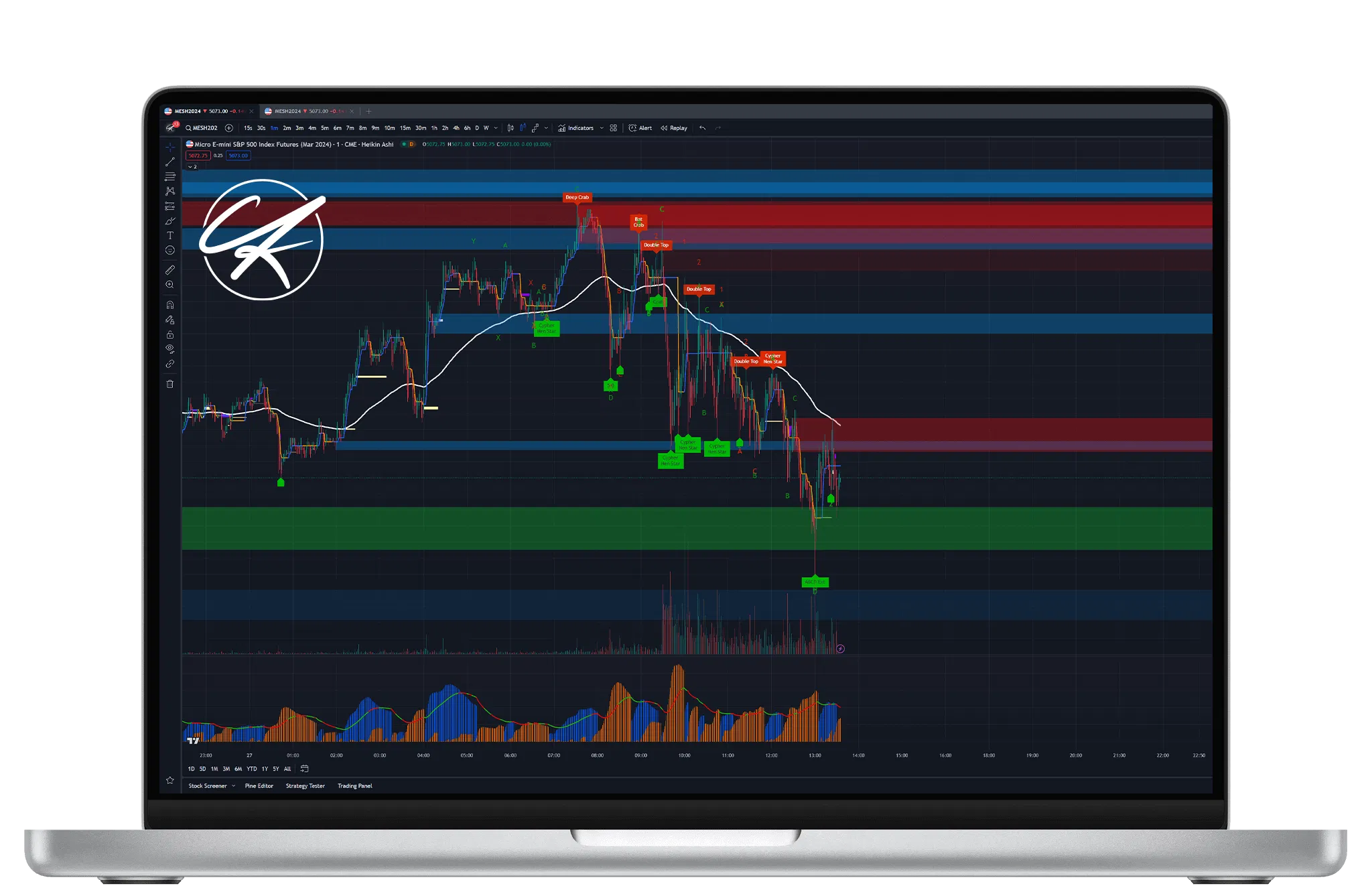
TradingView chart analysis showing CK Trading custom indicators with supply and demand zones for S&P 500 futures.

THE STEP-BY-STEP ACTION PLAN

If you want to move from "curious" to "consistently profitable," you need a roadmap. Here is the exact path we guide our students through in our futures trading course:

1. EDUCATION FIRST

Don't touch a live button until you understand the "Why" behind the "What." Learn the difference between a trailing drawdown and an end-of-day drawdown. Understand how news events like the CPI impact the Nasdaq.

2. CHOOSE YOUR CAPITAL PARTNER

Select a prop firm that fits your style. For most of our students, that's Lucid Trading or Apex Trader Funding. You aren't risking your savings; you're risking an evaluation fee.

3. MASTER THE MICROS

Start with one or two contracts of MES or MNQ. Focus on base hits, not home runs. If you can consistently make $100 a day with Micros, you can scale that to $1,000 a day with Minis. The math is the same; only the zeros change.

4. USE THE TOOLS

Leverage the ATA algorithm. Let the AI do the heavy lifting of identifying zones, while you focus on the execution and the psychology.

A professional trader in a cafe setting, symbolizing the freedom and focus achieved through disciplined futures trading.

RISK MANAGEMENT: THE ONLY RULE THAT MATTERS

In trading, your capital is your oxygen. If you run out of oxygen, the game is over.

We preach a low-risk approach. Our goal is to help you pass evaluations by minimizing drawdowns. We don't "gamble" on earnings or "hope" for a reversal. We wait for the setup that our AI confirms and that our training validates.

When you trade with a prop firm, the risk is capped. If you blow the account, you lose the evaluation fee: not your life savings. This psychological safety net is what allows our traders to execute with ice in their veins.

JOIN THE COMMUNITY

Trading is a lonely business if you do it alone. That’s why we’ve built a community led by CK (George Ama). We provide live trading sessions, 28-year floor trader expertise, and a support system that keeps you accountable.

Whether you are a complete beginner or an experienced trader looking to scale to 6-figure payouts, we have the framework to get you there.

READY TO SEIZE YOUR FINANCIAL SOVEREIGNTY?

Stop dreaming and start executing. Use the links below to access the best tools and capital in the industry.


🚀 PRIMARY RECOMMENDATION: LUCID TRADING

Lucid Trading offers the fastest path to funding with their 1-day evaluation and beginner-friendly rules.


📈 SECONDARY OPTION: APEX TRADER FUNDING

One of the most trusted names in the industry with massive payout potential.


🛠️ GET THE FULL SYSTEM

Join the CK TRADING INSTITUTE OF TECHNOLOGY today and get access to the ATA algorithm, our comprehensive course, and our expert-led community.


A professional trader at a modern workstation, focusing on multiple monitors of market analytics.