
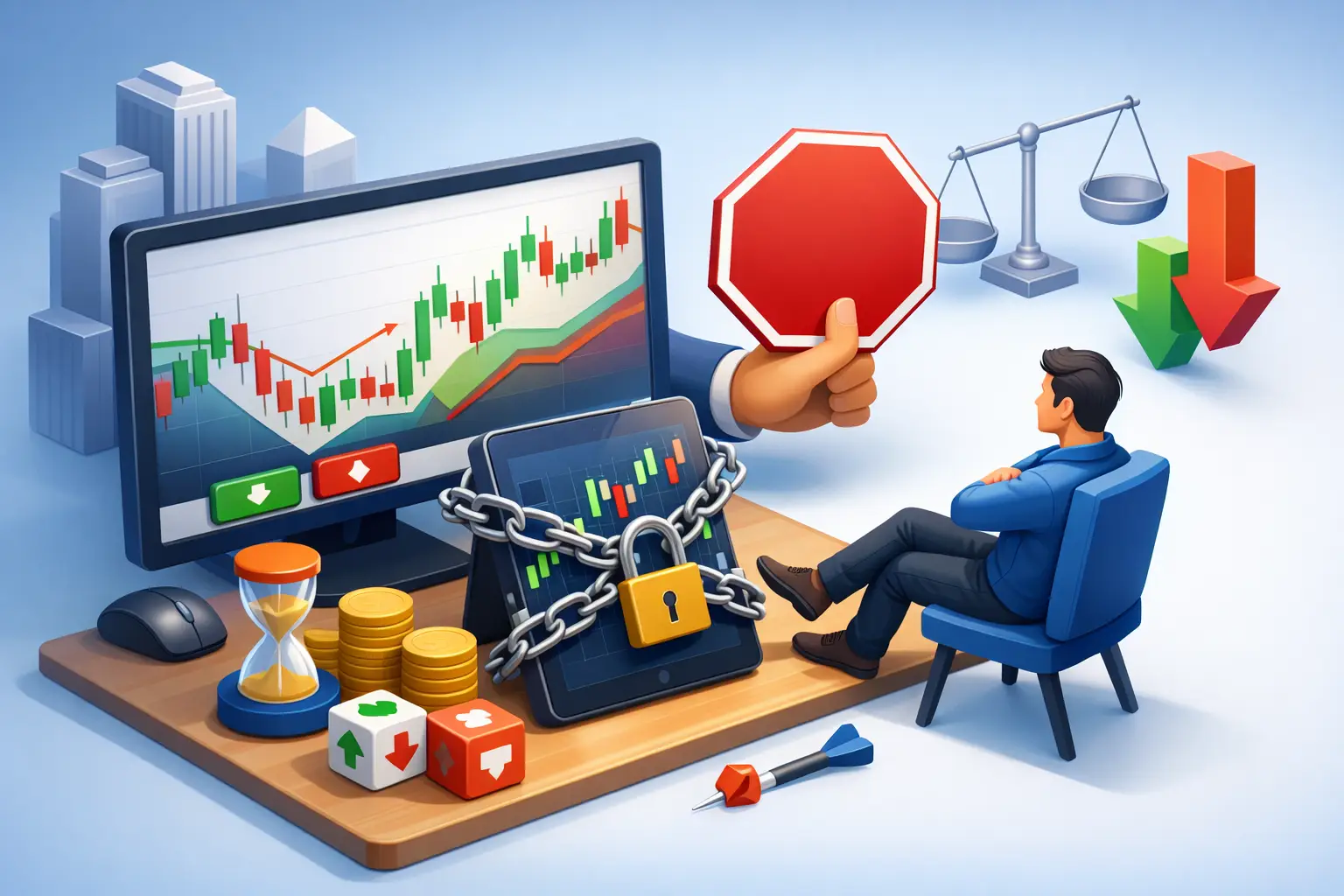
How to Avoid Overtrading Futures Without Forcing Trades
The fastest way to blow a futures evaluation is rarely one bad trade. It is the string of extra trades that follow: chasing a move after the entry is gone, trying to win back a small loss, or trading the midday chop because sitting still feels unproductive. Learning how to avoid overtrading futures is not about becoming passive. It is about putting your capital, your drawdown, and your decision-making under a process you can repeat.
For prop firm traders, this matters even more. You are not trying to catch every tick in the E-mini S&P 500, Nasdaq, or crude oil. You are trying to meet a profit target while protecting the account long enough to get funded and qualify for payouts. That requires patience that is planned before the market opens, not willpower you hope shows up after two losing trades.
Why Overtrading Blows Futures Accounts
Overtrading is not defined only by the number of trades you take. A trader can take six quick, rule-based scalps during an active opening range and remain completely disciplined. Another trader can take two oversized, emotional trades and do serious damage.
The real issue is taking trades that were not part of your plan. Those trades usually appear when you feel late, frustrated, bored, or overly confident after a win. Futures move quickly, and leverage makes every impulsive decision feel bigger. On a prop account, an unnecessary loss can also reduce the room you have to manage the next valid setup.
This is why more screen time does not automatically create better results. The market offers endless candles, but your edge may only appear once or twice. Professional execution means waiting for those moments instead of inventing reasons to trade.
How to Avoid Overtrading Futures Before the Open
Your best defense against overtrading is built before the opening bell. If you start your session with no clear levels, no defined setup, and no risk number, every market movement can look like an opportunity.
Begin with a short pre-market routine. Mark the prior day high and low, overnight range, major support and resistance, and the levels where you expect price to react. Check the economic calendar as well. A major CPI release, employment report, or Fed announcement can completely change the pace of the session. That does not mean you must avoid volatility, but you should know when it is scheduled instead of getting caught by surprise.
Then decide what you are actually allowed to trade. For example, you may only take a long when price reclaims a key level, confirms market structure, and gives you a defined stop location. Or you may trade a rejection at the high of day only when momentum stalls and your charting rules align. The exact strategy can vary, but the conditions need to be specific enough that you can say yes or no without negotiating with yourself.
A good question before every entry is simple: “Would I take this exact trade if I were still flat on the day?” If the honest answer is no, it is probably a revenge trade, a chase, or a boredom trade.
Set Limits That Make Discipline Automatic
Motivation is useful, but limits protect you when motivation disappears. Your daily risk plan should include a maximum loss, a maximum number of trades, and a point where you stop trading after reaching your daily goal.
For many evaluation traders, a daily loss limit that is well below the firm’s hard drawdown limit is essential. The firm’s limit is not your target. It is the emergency wall. Your personal stop should give you room to return tomorrow with a clear head.
Trade limits work the same way. If you know you tend to spiral after losses, set a cap such as three entries per session. If your strategy occasionally requires a re-entry, define what qualifies as a new setup versus what is simply another attempt to force the same idea. A re-entry can be valid when market structure changes and your setup returns. Repeatedly buying because you “know it has to go up” is not a strategy.
Your winning limit matters too. Traders often give back solid mornings because they stay at the screen looking for more. If your plan calls for a modest daily target, honor it. A green day does not need to become a home run to be valuable. Small, controlled gains can build consistency while preserving the drawdown cushion that keeps a funded account healthy.
Consider using practical guardrails:
- Set your daily dollar loss before you place the first trade.
- Decide your maximum number of entries for the session.
- Use bracket orders with a defined stop and target whenever your platform allows it.
- Step away for a scheduled reset after a loss or after hitting your daily goal.
These rules are not there to limit your potential. They are there to prevent one emotional hour from erasing a week of disciplined work.
Trade One Setup, Not Every Market Move
Many traders overtrade because their charts have too many signals and their rules are too loose. They see a breakout, then a reversal, then a moving average cross, then a random candle pattern. Soon, every direction looks tradable.
Reduce the number of decisions you need to make. Pick one or two high-quality setups and learn their behavior in different conditions. Know what they look like during a strong trend, inside a range, and around major levels. More importantly, know when they are not working.
For example, a breakout strategy may perform well when volume expands and price holds above a key level. In a tight midday range, the same breakout can become a trap. The answer is not to trade both sides faster. The answer may be to recognize that your setup has no edge in that environment and wait.
This is where replay, journaling, and live review create a real advantage. When you document your trades, do not just record profit and loss. Record the reason for entry, the time of day, whether it matched your setup, and what you were feeling. You will quickly see whether your best trades share common conditions and whether your worst losses came from the same emotional pattern.
Use a Reset Rule After a Loss
A loss is part of trading. The problem starts when a loss becomes a command to act immediately.
Create a reset rule that interrupts that reaction. After a full stop-out, walk away from the screen for five or ten minutes. After two losses, end the session or require a complete review before another entry. The right rule depends on your strategy and account size, but it must be firm enough to break the urge to make it back right now.
During the reset, ask what changed. Did you follow your plan and take a normal loss? If so, there may be nothing to fix except waiting for the next qualified opportunity. Did you enter late, ignore a level, or increase size? Then the next trade should not happen until you identify the mistake.
Do not confuse urgency with opportunity. The market will be open tomorrow. Your job is to make sure your account is too.
Size Down Until You Can Follow Your Rules
If you cannot respect your stop, your size is too large. This is especially common with newer futures traders who focus on the potential payout instead of the amount they can lose on each contract.
Trading smaller can feel slow, especially when you see big moves on the chart. But smaller size gives you room to practice clean execution without turning every tick into an emotional event. Once you can follow your rules consistently at a smaller size, you have evidence that you are ready to scale responsibly.
The goal is not to prove courage by holding more contracts. The goal is to become the trader who can protect capital, execute a plan, and show up the next day without needing a miracle trade.
Build Accountability Into Your Trading Day
Overtrading gets stronger in isolation because there is no pause between the impulse and the click. Accountability adds that pause.
Share your daily plan with a trading community, keep a written checklist beside your screen, or review your execution with a coach. At CK Trader Pro, the focus is not just finding entries. It is building the habits that help traders pass evaluations and manage funded accounts with discipline.
A simple end-of-day scorecard can be more valuable than obsessing over P&L. Grade yourself on whether you respected your loss limit, waited for valid setups, used proper size, and stopped when your plan told you to stop. A red day with clean execution can be a productive day. A green day built on reckless entries is a warning sign.
The next time you feel the urge to take “just one more” trade, pause long enough to name the reason. If it is not a setup you planned, protect the account and let it go. The trade you skip may be the one that keeps your evaluation, your confidence, and your long-term progress intact.